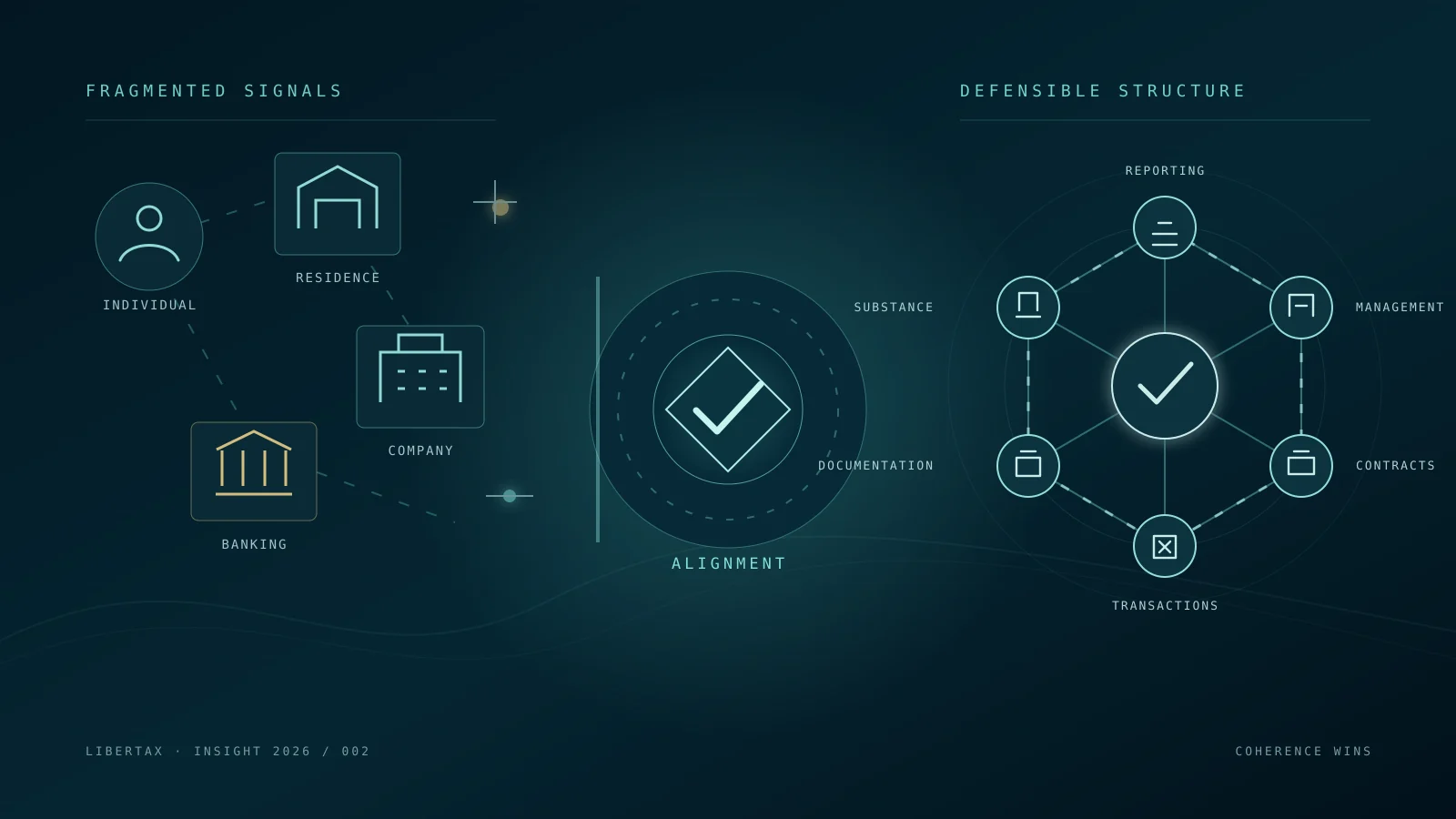

A founder may use an exchange in one country, hold an account through a company in another and remain tax resident in a third. Each fact may be explainable. The risk begins when the records describe different owners, activities or places of residence.
CARF matters because it connects identity and transaction data to tax residence. It does not decide the tax result. It makes the facts easier to compare.
From reporting framework to operational data
For years, automatic tax transparency focused mainly on bank accounts and traditional financial assets through the Common Reporting Standard. Crypto-assets developed outside much of that infrastructure, allowing value to be held and transferred without a conventional bank or investment institution.
The OECD Crypto-Asset Reporting Framework creates a standardised system for collecting and automatically exchanging tax-relevant information on crypto-asset users and transactions. CARF does not decide how a transaction is taxed. It gives tax authorities more structured information with which to compare income, gains, holdings and transfers against the taxpayer's filings.
Implementation has moved from policy design into domestic law, customer due diligence and operational reporting. Under DAC8, the European Union applies the framework from 1 January 2026 and the first exchanges of 2026 information are due by 30 September 2027. The United Kingdom also commenced its CARF regime on 1 January 2026, with the first reports due by 31 May 2027.
Those dates come from the European Commission and HMRC frameworks cited below. The OECD commitment timetable includes further waves, but domestic scope, filing dates and exchange relationships still need to be checked jurisdiction by jurisdiction.
What CARF connects—and what it does not decide
Reporting Crypto-Asset Service Providers may have to identify users, establish their tax residence and aggregate information about reportable transactions. The exact fields depend on the applicable rules, but the architecture is designed to connect a person or entity to activity across the reporting period.
A common misconception is that crypto activity is governed mainly by the country in which an exchange is incorporated or by the apparent location of a wallet. Tax liability normally depends on residence, domicile where relevant, source, the legal nature of the activity and whether it is undertaken personally or through an entity.
CARF reinforces that distinction because information is organised for exchange with the jurisdiction of tax residence. Moving assets between platforms, using an overseas exchange or placing an account in a foreign company's name does not by itself change residence, beneficial ownership or the substantive character of the activity.
- Identity, address and tax identification details for individual users.
- Registration, residence and controlling-person information for relevant entities and arrangements.
- Crypto-asset type, transaction type, units and transaction value.
- Aggregated acquisitions, disposals, exchanges and transfers, including relevant fiat or fair-market values.
Companies, partnerships and controlling persons
International structures remain legitimate and useful when they serve a real commercial purpose. A company may be appropriate for operations, treasury, intellectual property, employment, investment activity or access to a particular regulatory and banking environment.
The structure must nevertheless be coherent. The account holder, beneficial owner, decision-makers, place of management, contracts, accounting records and tax filings should tell the same economic story. An entity used only as a label on an exchange account can create more inconsistencies than protection.
Self-custody and decentralised finance
CARF does not place every blockchain address in one central global database. Its primary obligations fall on service providers that are within scope and have the required nexus to an implementing jurisdiction.
Self-custody may therefore sit outside direct reporting by a wallet provider. That does not make the activity invisible: transfers into or out of a reporting platform create records, and public blockchain transactions remain traceable. In decentralised finance, the result depends on the actual arrangement and whether a person or entity exercises sufficient control or influence to fall within the service-provider rules.
What CARF does not change
The framework improves visibility; it does not replace the legal and factual analysis of each transaction.
- It does not create a universal crypto tax: every jurisdiction retains its own income, capital-gains, corporate and other tax rules.
- It does not make every transaction taxable: a transfer between wallets owned by the same person is not automatically equivalent to a sale, exchange, reward, payment or distribution.
- It does not eliminate lawful international planning: it makes undocumented or internally inconsistent planning harder to defend.
- It does not make incorporation sufficient: residence, management, substance and beneficial ownership remain decisive.
A practical readiness framework
Individuals and businesses with material crypto-asset activity should review their position before third-party reports are matched against historic filings.
- Confirm tax residence for every relevant year and retain supporting evidence.
- Map and reconcile exchanges, brokers, custodians, self-hosted wallets and entity accounts, including fees, bridges and internal transfers.
- Separate personal and corporate activity, document transfers of ownership and review management and substance where an entity is operated from another country.
- Document source of funds and source of wealth for material acquisitions, disposals and transfers.
- Check historic filings and correct material omissions through the appropriate procedure before they are identified through third-party data.
Implications for international tax planning
The direction is clear: planning is moving away from opacity and towards demonstrable substance, accurate residence analysis and evidence-based compliance. Competitive jurisdictions remain relevant, but incorporation alone is not a strategy.
For internationally mobile founders and investors, the strongest arrangements align immigration status, personal tax residence, company management, banking, accounting, contracts and the actual location of activity. CARF makes that alignment especially important where virtual assets form a material part of a business or portfolio.
Conclusion
CARF will not produce identical tax outcomes in every country. It changes what can be compared: transaction reports, residence declarations, entity records and tax filings can be brought into the same analysis at lower cost.
The appropriate response is not to abandon international planning. It is to ensure that the structure has a real purpose, residence is analysed correctly, ownership is transparent, records are complete and tax filings reflect the economic reality.